


Everything You Need to Know About Auto and Manual Pool Chlorinators

A pool chlorinator is the quiet workhorse that keeps your water safe to swim in without you hauling buckets of chemicals around every weekend. It doses the sanitiser for you, holds the chlorine level steady, and lets you spend more time in the pool than beside it.
Most Australian backyards now run a salt chlorinator, but there are a few types worth knowing about, and the part that matters most for your wallet is the cell inside. This guide covers how a pool chlorinator works, the different types, what size suits your pool, how to tell when the cell needs replacing, and how to keep the whole system humming for years.
What a Pool Chlorinator Does
Chlorine is what keeps pool water hygienic, killing the bacteria and algae that would otherwise turn your pool into a health risk and a green mess. You can read more on why it matters in our guide to adding chlorine to swimming pools.
A pool chlorinator simply automates that job. Instead of measuring and adding chlorine by hand, the chlorinator delivers a steady, controlled dose while your pump runs, so the level stays where you set it. The result is consistent sanitising, far less handling of raw chemicals, and water that is ready whenever you want a swim.
Types of Pool Chlorinators
Not every chlorinator works the same way. The right one comes down to how hands-off you want to be and how much you swim. Here is how the main options compare.
|
|
|
|
|
|
|
|
|
|
|
|
|
|
|
|
|
|
|
|
Manual dosing is cheap to start but eats up your time and never quite chlorinates evenly. Tablet feeders take some of that load off. For most owners, though, a salt or mineral chlorinator wins on convenience and water feel, which is why they dominate Australian pools. If you are still deciding on a sanitising approach, our comparison of a chlorine, bromine or saltwater pool lays out the trade-offs.
How a Salt Chlorinator Makes Chlorine
A salt chlorinator does not run on the chlorine you buy. It makes its own from ordinary salt dissolved in the pool. As the pump pushes salty water through the chlorinator cell, a low-voltage current splits the salt (sodium chloride) and water through a process called electrolysis, releasing chlorine that dissolves straight into the pool to sanitise it.
Once that chlorine has done its work, it reverts to salt, and the cycle starts again, so you only top up salt occasionally rather than constantly buying chlorine. Most standard systems run best at a salt level of roughly 4,000 to 6,000 ppm, while low-salt and mineral models need less. The cell is the heart of the system, and because it is doing the chemical heavy lifting, it is also the part that eventually wears out.
What Size Pool Chlorinator Do I Need?
Chlorinators are rated by how much chlorine they produce per hour, measured in grams. The starting point is simple: a pool needs roughly 20 grams of chlorine for every 10,000 litres per day.
Divide that daily figure by the hours you run your pump (six to eight is typical) to find the output you need, then size up from there. Running a larger cell at a lower setting puts less strain on it and stretches its life, which saves you money down the track.
|
|
|
|
|
|
|
|
|
|
|
|
|
|
|
|
|
|
|
|
Lean towards the higher end if you live somewhere hot, swim often, or have a pool in full sun, since UV burns chlorine off fast. A self-cleaning unit like the Crystal Clear 35 g/hr salt chlorinator suits medium to large pools and runs on a low salt level. Always check the maximum pool size the unit is rated for before you buy.
Choosing a Chlorinator Brand
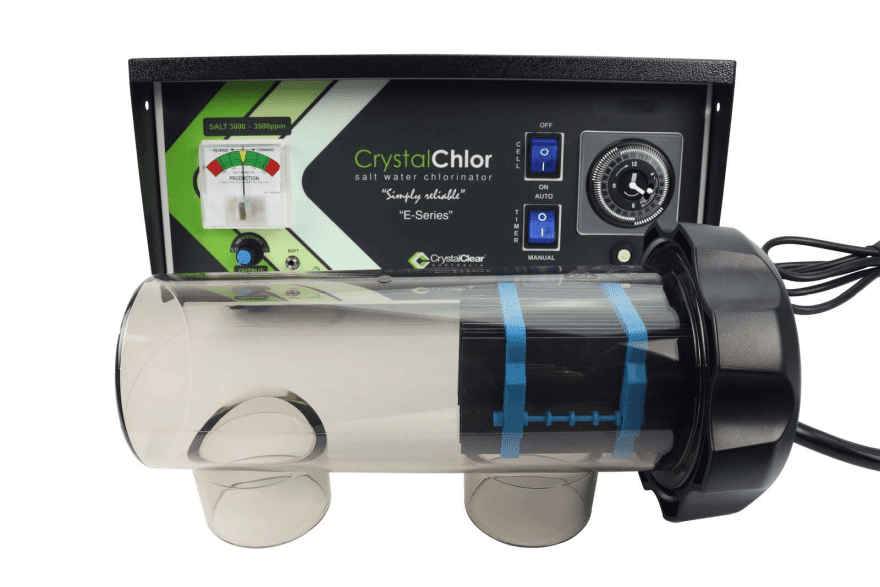
Australia has a handful of well-supported brands, and the main thing is choosing one with parts you can get easily. Zodiac is one of the most common, with widely stocked cells. Astral (also sold as Hurlcon) builds the popular self-cleaning E-series, Waterco and Davey are both long-standing Australian names, and Monarch is a budget-friendly option.
The brand matters most when it comes to the cell, because a replacement has to match your exact unit. The Australian-made Astral E25 replacement cell, for instance, produces 25 grams an hour and only fits the matching control box, so always pair the cell to your system.
How Long Do Chlorinator Cells Last and When to Replace Yours
A chlorinator cell typically lasts three to seven years, depending on how hard it works, your water chemistry and how well you look after it. The plates inside slowly wear down with use, and once they do, the cell simply cannot make enough chlorine, no matter how high you turn it up. Watch for these signs that yours is on the way out:
- Low or no chlorine, even with the output cranked up and the salt level correct.
- A low-salt warning that stays on after you have confirmed the salt is fine.
- Heavy calcium scale on the plates that keeps coming back after cleaning.
- Visibly worn, flaking or discoloured plates inside the cell.
The quickest way to confirm a tired cell is to test the water and watch the output. Our guide on using a 4-in-1 pool test kit shows you how to check whether your chlorine is actually keeping up. When it is time for a new one, match the cell to your system.
Popular self-cleaning options include the CompuPool A200 cell for pools up to around 80,000 litres and the CompuPool A300 cell for larger pools.
Cleaning and Maintaining Your Chlorinator Cell
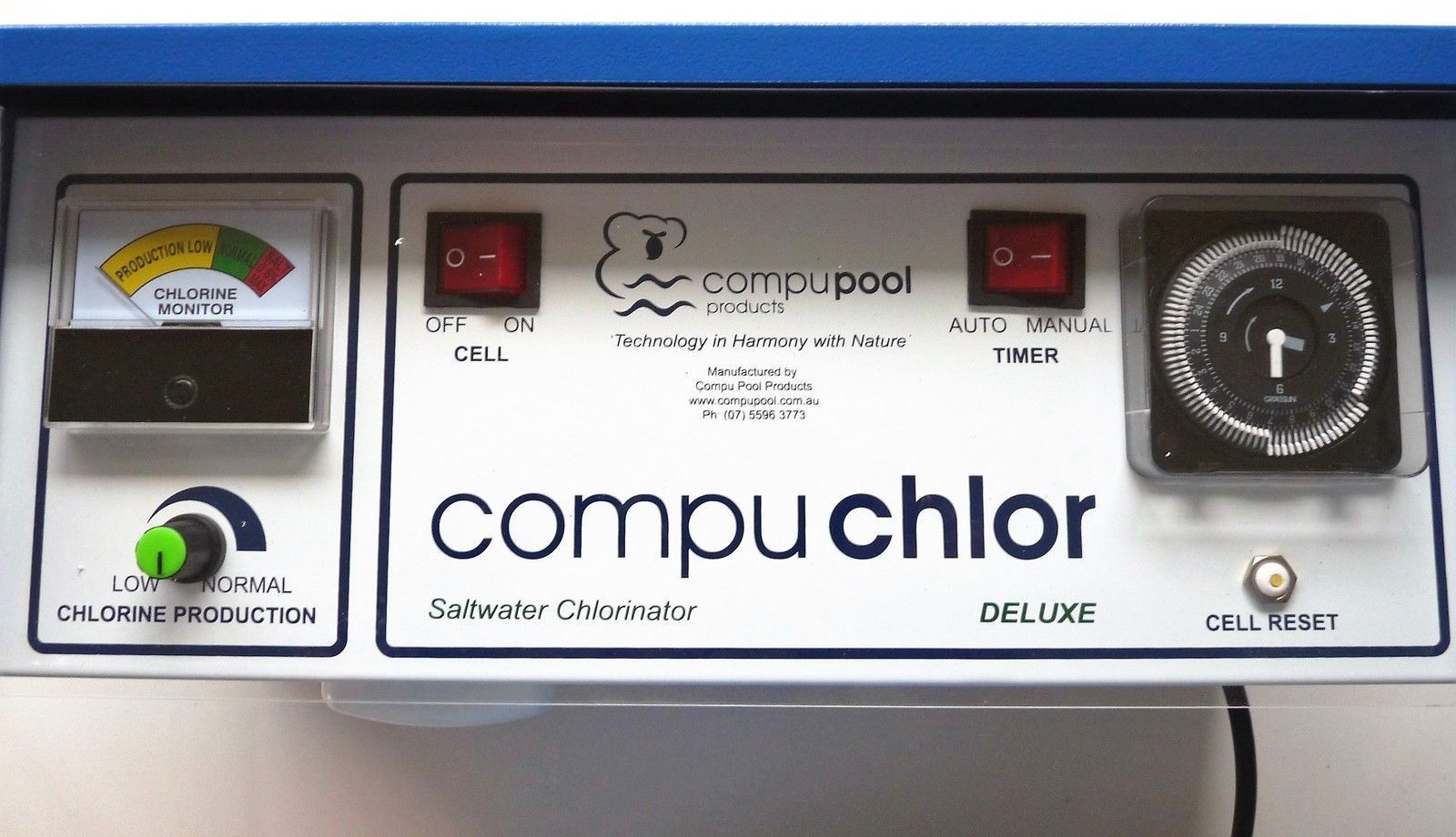
Scale build-up is the main thing that shortens a cell's life. In hard-water areas, calcium crusts onto the plates and chokes chlorine production. Self-cleaning cells reverse their polarity to shed most of this on their own, but they still need an occasional check.
Inspect the cell every three months or so, and only acid wash it when you can actually see white scale on the plates - over-cleaning wears the coating off and shortens the cell's life. When a cleaning is due, use a proprietary cell cleaner, or mix a solution of one part hydrochloric acid to ten parts water.
Always add the acid to the water, never the other way around, and wear gloves and eye protection. Soak the cell for only a few minutes until the bubbling stops, then rinse it thoroughly with fresh water before refitting. In most pools, an acid wash every three to six months is plenty, and softer water needs it even less often.
Troubleshooting Common Chlorinator Problems
Most chlorinator dramas trace back to a few causes. Low chlorine output usually means a scaled or ageing cell, or a salt level that has drifted too low. A low-salt light is not always about salt, though, since scale, cold water or a worn cell can all trigger it, so test the salt before tipping more in.
Heavy rain is a common culprit, too: it dilutes the salt and can set off the warning, and our guide on caring for your pool after a summer storm covers getting things back in balance. If the cell is not producing at all, check that the pump is running and pushing enough water through it, and that a dirty filter is not starving it of flow. Clear those off the list, and a stubborn fault almost always points to the cell or the control board.
Find the Right Chlorinator or Replacement Cell
Whatever stage you are at, the right gear keeps your water clear with less effort. Browse the full range of pool chlorinators at Aquaneo if you are buying or upgrading a system, or head straight to salt chlorinator cells when it is time for a replacement.
We stock Zodiac chlorinator cells and Waterco parts to match the major brands, plus pool salt and minerals to keep your system fed. Everything ships Australia-wide, so you can get back to clean, clear water sooner.
Frequently Asked Questions
What does a pool chlorinator do?
It automates sanitising your pool. Rather than adding chlorine by hand, the chlorinator doses it steadily while the pump runs. A salt chlorinator goes a step further and makes the chlorine itself from dissolved salt.
How long do chlorinator cells last?
Usually three to seven years, depending on how hard the cell works, your water chemistry and how well you maintain it. Running a larger cell at a lower output helps it last longer.
How do I know if my chlorinator cell needs replacing?
Tell-tale signs are low or no chlorine output despite a correct salt level, a low-salt warning that will not clear, heavy scale that keeps returning, and visibly worn or flaking plates.
What size pool chlorinator do I need?
Work on roughly 20 grams of chlorine per 10,000 litres of water per day, divided by your daily run hours, then size up. As a rough guide, a 25 g/hr unit suits many medium pools, with larger pools needing 35 g/hr or more.
How often should I clean my chlorinator cell?
Inspect it every three months and acid wash only when you can see scale on the plates, which is usually every three to six months in hard water. Avoid over-cleaning, as it wears the plate coating and shortens the cell's life.