


Chlorine, Bromine, or Saltwater Pool – Which One Is Best for Me?

Three sanitising systems, three very different weekly routines. The one you pick decides whether pool care is a ten-minute job on a Saturday morning or a running argument with your test kit.
We sell gear for all three, so there is no barracking for a favourite here. What follows is how each system behaves in an Australian backyard, what it costs in 2026/2027, and a short set of questions that usually settles it.
The short answer
If your pool is outdoors and you want the least to do each week, go saltwater. The chlorinator makes the sanitiser for you and your job shrinks to testing, topping up salt and cleaning the cell now and then.
If the budget is tight, stay with manually dosed chlorine. Nothing else gets you swimming for so little, and you can always convert later.
Bromine is a poor choice outdoors. UV tears through it and there is no stabiliser to protect it the way cyanuric acid protects chlorine. Indoors and in spas it is a different story, and that is where most Australian bromine ends up.
How the three actually work
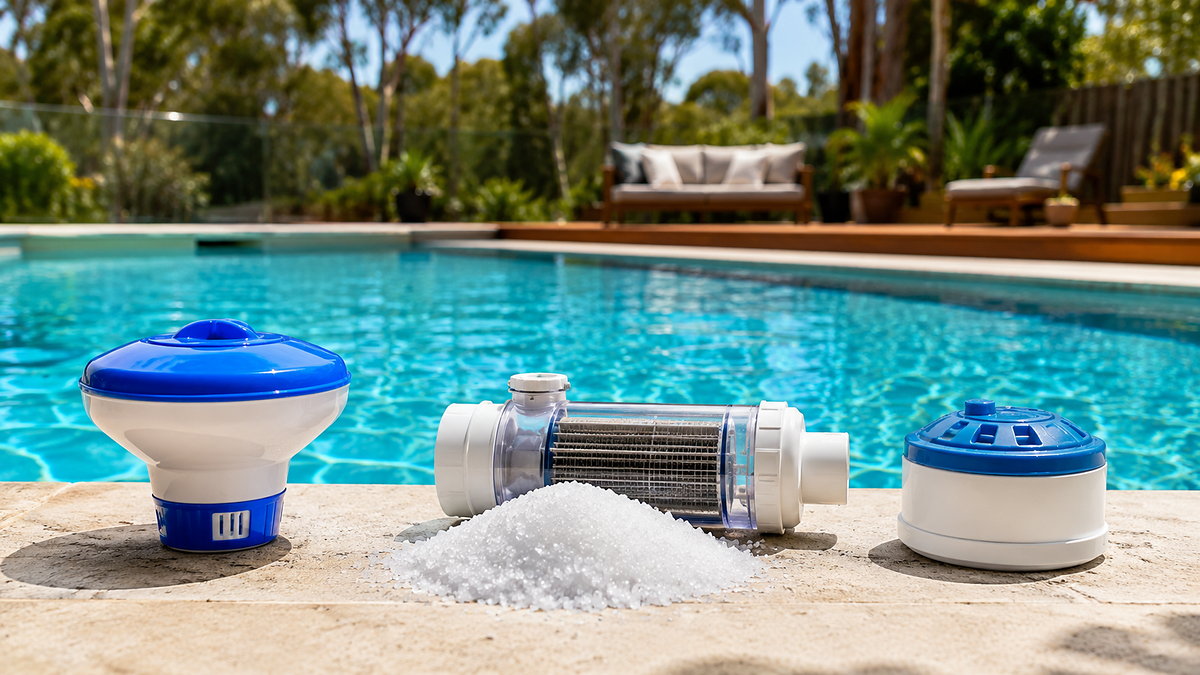
Chlorine is the benchmark. You add it as granules, liquid or tablets, it oxidises bacteria and organic muck, and you keep it in range by testing and dosing. A floating dispenser or inline feeder will handle tablet dosing for you, but somebody still has to load it.
Bromine behaves similarly and holds up far better in hot water, which is the whole reason spa owners use it. Spent bromine can also be reactivated with an oxidiser dose rather than replaced outright. Its weakness is sunlight. Direct UV destroys it quickly and, unlike chlorine, there is nothing you can add to shield it.
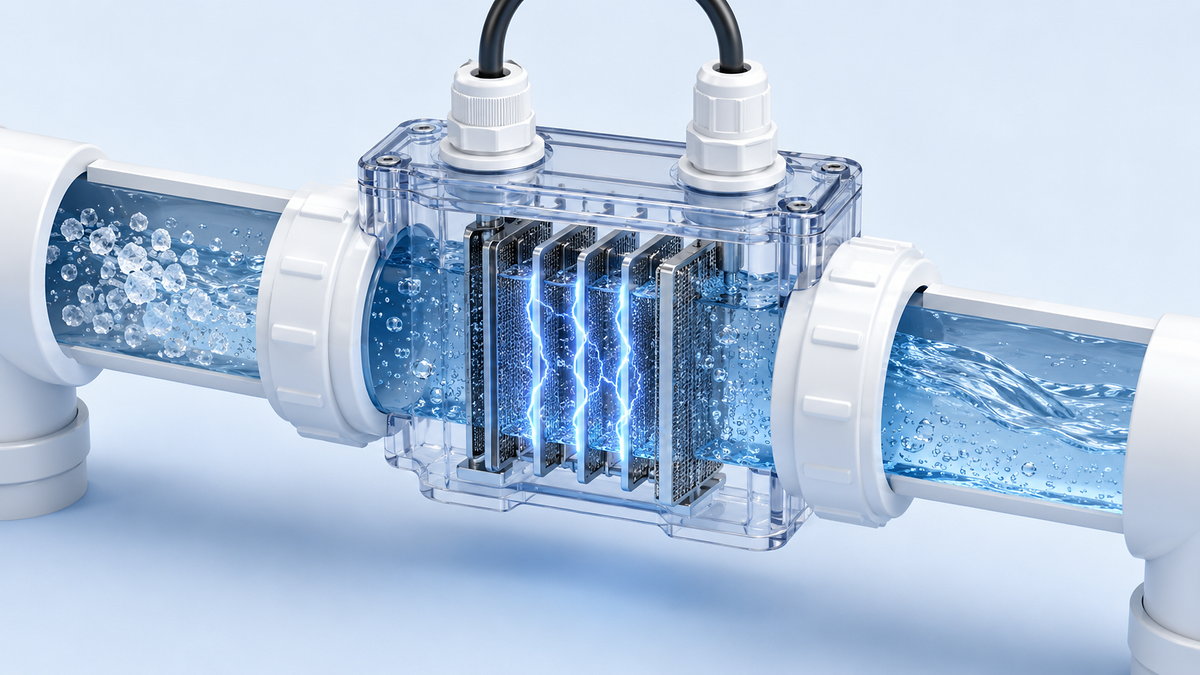
Saltwater is where the confusion lives. A salt pool is not a chlorine-free pool. The chlorinator runs a low-voltage current through a cell and converts dissolved salt into chlorine inside the pipework, so the pool sanitises itself with chlorine it makes on the spot. The water sits at roughly a tenth of seawater salinity, which is what gives it the softer feel people describe. If salt against chlorine is the only comparison you care about, we have a focused saltwater vs chlorine piece that goes deeper on those two.
Side by side
Figures below are 2026 AUD for a typical 80,000L residential pool.
| Chlorine | Bromine | Saltwater | |
|---|---|---|---|
| Setup cost | AUD 20-300 (dispenser or feeder) | AUD 20-300 (dispenser or feeder) | AUD 500-2,000 fitted to an existing pool |
| Annual chemical spend | AUD 400-1,000 (chlorine plus balancing) | Highest per kilo; small volumes in a spa | AUD 50-200 salt, plus balancing |
| Weekly effort | Test and dose weekly | Test every 2-3 days in a spa | Test weekly, top up salt after rain |
| What wears out | Nothing major | Nothing major | Cell every 3-7 years; unit 7-15 years |
| Skin and eyes | Fine when balanced; chloramines sting | Milder for most people | Noticeably softer water |
| Smell | Strong only when chloramines build up | Milder, less clingy | Low with a correctly sized cell |
| Best for | Tight budgets, smaller pools | Spas and indoor pools | Outdoor family pools |
Read the table and the trade-off is plain enough. Chlorine wins on price, salt wins on effort, bromine wins in the two places the other two struggle. Nothing wins across the board, which is why the questions at the end ask about your pool rather than about products.
What it costs in 2026/2027
Pricing swings hard between brands, installers and states, so treat these as budgeting figures rather than quotes.
Chlorine. Barely anything to set up: $20-50 AUD for a floating dispenser, $100-300 for an inline tablet feeder installed. Budget $300-800 AUD a year on granular chlorine for that pool size, plus $100-200 on stabiliser, acid and buffer. Nothing major wears out, which is why chlorine still comes out cheapest over ten years for anyone who does not mind the labour.
Bromine. Around $80 AUD per 2 kg of spa bromine tablets at Australian retail, give or take, which puts it at roughly double the price of chlorine per kilo. For a spa the volumes are tiny so the annual spend stays small. For a full indoor pool it adds up quickly. The feeder is cheap and there is no cell to replace.
Saltwater. The chlorinator is the line item that matters. Fitting one to a pool you already own generally runs $500-2,000 AUD. A complete saltwater setup on a new pool, gear and labour together, sits closer to $2,000-7,000. Converting an existing chlorine pool end to end usually lands between $1,500 and 4,500. After that, running costs drop to $50-200 a year on salt plus your usual balancing chemicals.
Then there is the cell, which is a consumable and the cost people forget. Our own salt chlorinator cell range starts near $55 AUD for small electrodes and runs past $1,100 for the big self-cleaning units, with most pool owners landing somewhere around $400. Get two quotes before committing to a chlorinator. The spread between installers is wider than the spread between brands.
The weekly reality
A hand-dosed chlorine pool wants a rhythm: test, dose, brush, empty the baskets. Half an hour once you have the routine, and honestly it is not unpleasant work. Then February arrives, or a storm, and chlorine demand spikes exactly when you are least inclined to go out and test. That is the part people underestimate.
Saltwater takes most of it off you. The chlorinator doses while the pump runs, so you are left with weekly testing, topping up salt after heavy rain, and checking the cell for scale every few months.
A bromine spa sits between the two. Small water volume makes testing quick, but hot water moves fast, so every two or three days is the honest schedule rather than weekly. Keeping test tablets next to the spa helps more than any reminder on your phone.
Red eyes, itchy skin and that smell
Worth clearing up, because it drives a lot of buying decisions. The complaints people pin on chlorine are almost always chloramines. Chloramines form when chlorine combines with sweat, sunscreen and everything else swimmers bring in, and they build up when a pool is under-dosed. Not over-dosed. Under. If your pool reeks of chlorine, the usual fix is more oxidising, not less.
Bromine forms bromamines instead, which most people find gentler on eyes and skin and which smell milder. Salt pools still sanitise with chlorine, but the dissolved salt softens the feel of the water and continuous dosing keeps chloramine spikes rarer. If sensitive skin is the whole reason you are reading this, mineral and ioniser systems are worth a look too.
What wears out
Pumps and filters are common to all three, so the real question is what each system adds on top. Chlorine adds a dispenser or a feeder, and neither has a meaningful replacement cycle. Bromine adds a feeder sized for a spa or indoor pool, same story.
Saltwater adds the chlorinator and its cell. Manufacturers generally rate a cell at around 10,000 hours of runtime, which works out somewhere between three and seven years for most Australian pools depending on how long you run the pump, how hard your water is and whether the cell gets cleaned. When output drops and a clean no longer brings it back, a replacement cell restores full production. Check your chlorinator model before ordering, because cells are model-specific and there is no universal fit. If the unit itself is on its last legs rather than the cell, that is a different purchase and our chlorinator range is the place to start.
Indoors and in spas, bromine usually wins
Take a pool indoors and chlorine loses both its advantages. There is no UV breaking down chloramines and no breeze carrying the smell away, so an indoor chlorine pool needs disciplined oxidising to stay pleasant to swim in. Bromine loses its one weakness at the same moment.
In spas the case is stronger again, because bromine keeps working at 36-38 degrees where chlorine burns off fast. Heat stability plus lower odour is why bromine is the default for Australian spas.
Worth being straight with you here: we do not stock bromine tablets. What we do carry for spa sanitising is the Nature 2 mineral spa stick, along with floating and inline dispensers that take either chlorine or bromine tablets if you source bromine elsewhere. Whatever you run, never mix sanitisers, keep chemicals in their original containers and follow the label.
Mineral and ioniser systems
Two more options sit alongside the big three. Mineral systems add magnesium and other minerals to the water, usually alongside a chlorinator, to soften the feel further. Ionisers and multi-process systems like Enviroswim use copper and silver ions plus oxidation to do part of the sanitising, which cuts how much chlorine the pool needs without removing the need entirely.
They suit owners chasing the lowest practical chlorine level who do not mind running something less conventional. Our comparison of ionisers and Enviroswim covers the real maintenance load and who they suit.
Four questions that usually settle it
- Indoors, or a spa? Bromine. Heat stability and low odour beat everything else in that environment.
- Outdoor pool, and you want the least to do each week? Saltwater. The chlorinator does the dosing; you do the balancing and the occasional cell clean.
- Is upfront cost the deciding factor? Chlorine, and convert later when it suits.
- Is sensitive skin the driver? Saltwater for the softer water, bromine if it is indoors or a spa, or a mineral system if you want chlorine as low as it goes.
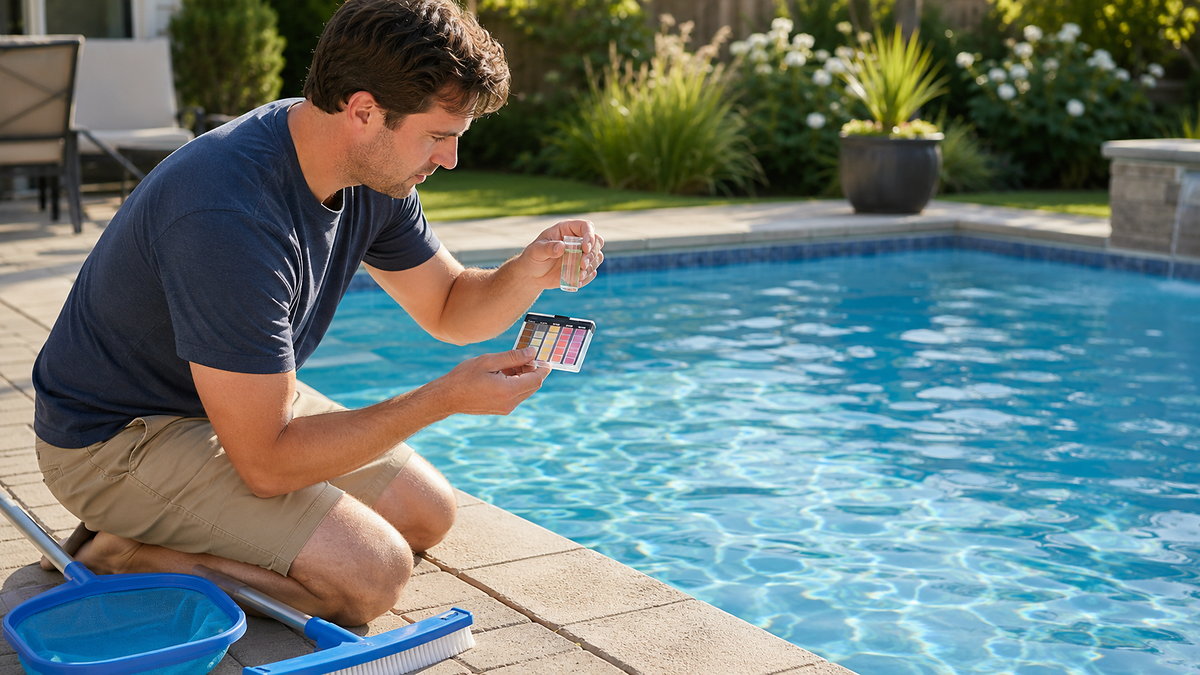
Whichever way you land, test the water before you change anything. A 4-in-1 test kit tells you where you stand today, and every system above falls over without balanced water.
Sorting out your setup
If saltwater is the direction, have a look at our chlorinators. If the unit is fine and it is the cell that is tired, the salt chlorinator cell range covers most Australian brands. Match it to your model, not to your pool size.
Running chlorine by hand? A floating dispenser or inline feeder takes the weekly guesswork out of tablet dosing, and test tablets or a full pool and spa test kit keep you honest about where the water actually sits. For salt pools, pool and spa minerals will soften the water further if that is what you are after.
We ship Australia-wide. If you are not sure which cell suits your chlorinator, send us the model number off the unit and we will check it for you.
Frequently asked questions
Is a saltwater pool actually chlorine-free?
No. The chlorinator converts dissolved salt into chlorine, so a salt pool is sanitised by chlorine the same as any other pool. The difference is that it is generated continuously instead of tipped in by hand, and the mild salinity gives the water a softer feel.
Which is cheaper long-term: chlorine, bromine or saltwater?
It depends on how you value your own time. Hand-dosed chlorine has almost no equipment cost but the highest chemical spend and all the labour. Saltwater costs more upfront and needs a new cell every few years, but salt itself is cheap. Bromine costs the most per kilo and really only makes sense for spas and indoor pools.
Can I convert my chlorine pool to saltwater?
Yes, and it is one of the most common upgrades in Australia. Converting end to end usually costs between $1,500 and 4,500 AUD, covering the chlorinator, installation and the initial salt load. The pool itself needs no structural work. Any mains electrical work has to be done by a licensed electrician.
Is bromine gentler on sensitive skin than chlorine?
Often, yes. Bromine forms bromamines rather than chloramines and most people find them less irritating, which is why spas run it. That said, a well-balanced chlorine or salt pool is comfortable for most swimmers, because the irritation comes from chloramine build-up rather than from chlorine itself.
How often do salt chlorinator cells need replacing?
Every three to seven years for most Australian pools, which reflects roughly 10,000 hours of runtime. High calcium, pH that drifts and infrequent cleaning all shorten cell life, so good water balance is the cheapest way to stretch the replacement out.
Do mineral systems replace chlorine completely?
No. They reduce how much chlorine a pool needs by doing part of the sanitising, but you still need a residual sanitiser to deal with bather load quickly. Treat them as chlorine-reduction systems rather than chlorine-free ones.